
How To Engineer 14-Minute Booth Visits

Proving the Exhibit Design: A Data-Driven Approach
In the world of event marketing, impressions are easy, but engagement is hard. A leading services provider at a major North American trade show faced a familiar exhibitor challenge: How to move beyond merely counting visitors and instead measure the quality and duration of their time spent in the exhibit. They were confident in their design, but they needed objective data to validate their strategic choices.
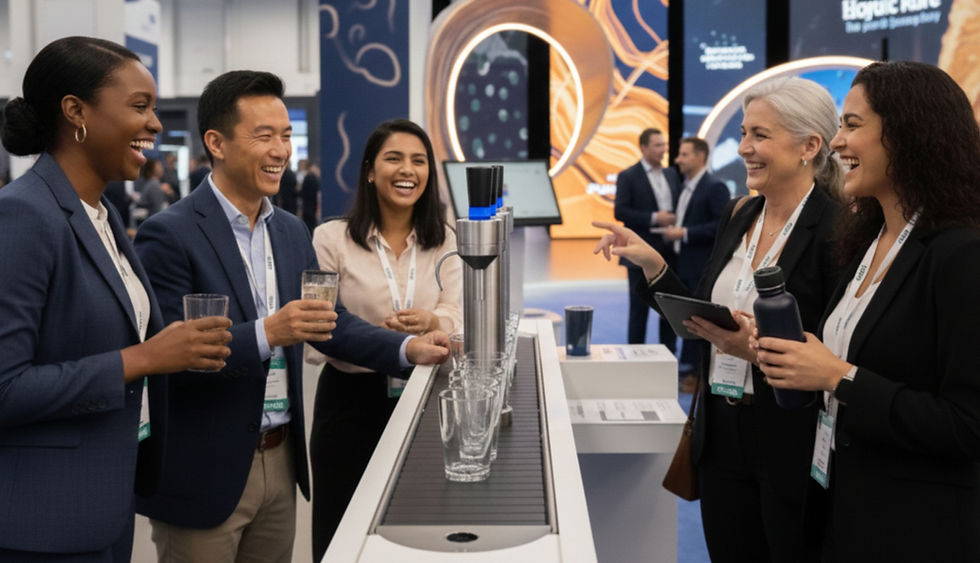
The core of their design centered on a hypothesis about visitor retention. They believed that by placing a popular, high-value amenity -an automated beverage station- at the furthest point in the exhibit, they could maximize the path of travel and leverage the natural queuing time to promote deeper interactions with their staff and services.

They partnered with Zenus AI to move from hypothesis to quantifiable fact, deploying ethical facial analysis sensors to track the full attendee journey from the moment they passed the exhibit to the moment they left a key engagement zone.
From Passing Traffic to Sustained Interest in the booth
The first step in validation was proving the exhibit could stop traffic. The front-of-booth design was immediately effective, achieving an outstanding 45% stop rate. This meant that nearly half of the thousands of attendees who passed by paused to observe the exhibit, a conversion rate far exceeding the typical event average.
This initial interest was successfully translated into deep engagement:
Conversion Success: Of those who stopped, a high percentage continued into a full visit. Most significantly, the conversion from a standard visit to an extended visit (lasting over one minute) was an impressive 40%, which is 7% higher than the standard industry benchmark. This data proved the exhibit was an engagement machine, drawing in highly motivated attendees and keeping them interested.
The Energy Factor: Energy levels inside the exhibit remained high, registering at 82%, placing the experience firmly in the upper-interactive range. This high-energy transfer from the aisle into the booth proved that the positive first impression was successfully maintained during the in-booth experience.
The Retention Strategy: A 5.5-Minute Stop
The strategic placement of the automated beverage station at the back of the space was the core design decision being tested. Zenus AI data provided the definitive answer: It worked.

Visitors spending time near the beverage station averaged a dwell time of 5.5 minutes. Considering the activation was a 'grab-and-go' amenity, this duration is a monumental success. It showed that the intentional layout successfully retained attendees for longer than a typical transactional stop, allowing staff to engage with visitors in a relaxed environment as they waited for their drink.
The main exhibit center also performed exceptionally well, with an even higher average dwell time of 7 minutes, proving that the primary product demos and sales presentations were highly effective.
Engineering the Power Surge: The 14-Minute Peak
A planned, high-value afternoon tasting activation (wine and chocolate) was scheduled for 1:00 PM on Day 1 and Day 2. This activation was intended to create a mid-day surge in deep engagement.

The Zenus AI dwell time graph registered an immediate and dramatic spike at 1:00 PM. The
average visit duration during this power hour surged to an average of 14 minutes. This data is incredibly valuable, providing the exhibitor with an objective, data-backed blueprint for programming. It confirmed that a sensory-rich, scheduled activation is a proven tactic for not just drawing a crowd but for settling them in for extended, high-quality engagement.
The Conclusion: Design with Data
This deployment is a perfect example of how strategic design, when measured with objective behavioral data, leads to verifiable ROI. The exhibitor now has definitive proof of their design's efficiency and a clear playbook for optimizing future events.
Their Key Takeaways:
A compelling front aisle drives high stop rates.
Positioning key activations deep inside the booth dramatically increases dwell time and conversion to sustained engagement.
Scheduled, high-value afternoon activations can engineer an objective surge in visit quality.
Zenus AI data allowed this event leader to move from subjective assessment to objective, data-backed proof of their exhibit's success, empowering their entire sales and marketing team.
Ready to stop guessing and start proving your exhibit's ROI? Contact us today at [email protected]
*This article is based on a real-life deployment. AI tools were employed for editing and the creation of visual aids.


Comments